An Image-Guided Option for Selected Knee Pain
Genicular artery embolization is a minimally invasive procedure that targets selected small blood vessels around the knee. It may be considered for some patients with osteoarthritis-related knee pain that has continued despite appropriate nonsurgical care.
A catheter is guided through an artery to the treatment area, where the physician reduces blood flow to abnormal vessels associated with inflammation. Candidacy depends on the diagnosis, imaging, circulation, earlier treatment, and overall health.
Preparation, access-site care, activity instructions, and follow-up are explained before the procedure, and response is monitored over time.
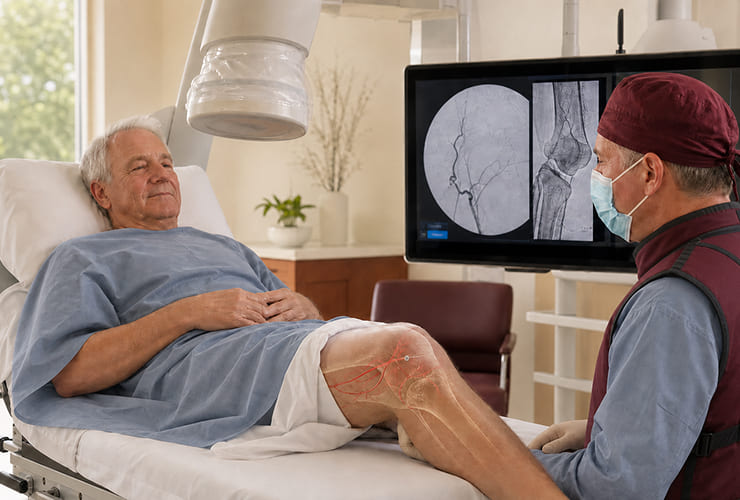
Careful Selection and Image Guidance
The specialist reviews knee symptoms, examination findings, X-rays or other imaging, circulation, and earlier care before deciding whether embolization is appropriate.

Why It May Be Considered
Knee pain associated with osteoarthritis
Symptoms affecting walking, stairs, or daily activity
Persistent pain after appropriate nonsurgical treatment
Clinical and imaging findings that support the procedure
What to Discuss With Your Specialist
Which knee and activities reproduce symptoms
Recent X-rays, MRI, and previous knee treatment
Circulation, kidney, allergy, and medication history
Expected recovery and how response will be measured
Conditions We Treat
Pain can have many different causes. Our specialists take time to evaluate each patient, identify the possible source of pain, and recommend care based on their individual needs.
Take the First Step Toward Better Pain Management
Our specialists are here to understand your pain, identify its possible source, and develop a personalized treatment plan focused on improving your function and quality of life.