Stabilizing a Painful Sacroiliac Joint
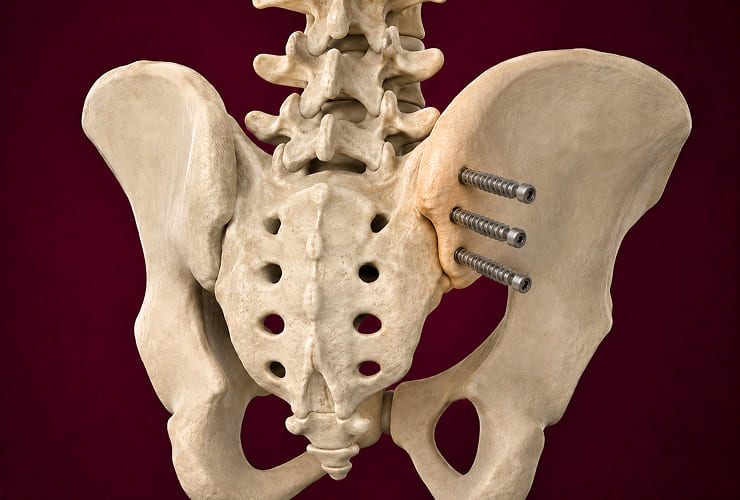
The sacroiliac joints connect the sacrum at the base of the spine to the pelvis. When one of these joints is confirmed as a persistent pain source, minimally invasive fusion may be considered after appropriate nonsurgical treatment has not provided sufficient improvement.
During the procedure, the physician uses image guidance to place an implant or implants across the affected joint. The goal is to stabilize the joint and support fusion while limiting disruption to surrounding tissue.
The surgical approach, implant, recovery restrictions, and expected follow-up depend on the patient’s anatomy, health, and the technique recommended by the treating physician.
Diagnosis Comes Before Stabilization
Evaluation and diagnostic testing help confirm the SI joint as the pain source before fusion is considered.
Why It May Be Considered
Persistent pain linked to a specific sacroiliac joint
Examination and diagnostic findings supporting the SI joint as the source
Limited improvement after appropriate nonsurgical treatment
Health and imaging findings suitable for a minimally invasive procedure
What to Discuss With Your Specialist
How the sacroiliac joint diagnosis was established
Previous therapy, injections, medications, and their results
The planned approach and type of implant
Walking, lifting, wound care, and rehabilitation after the procedure
Conditions We Treat
Pain can have many different causes. Our specialists take time to evaluate each patient, identify the possible source of pain, and recommend care based on their individual needs.
Take the First Step Toward Better Pain Management
Our specialists are here to understand your pain, identify its possible source, and develop a personalized treatment plan focused on improving your function and quality of life.