Stabilizing a Vertebral Compression Fracture
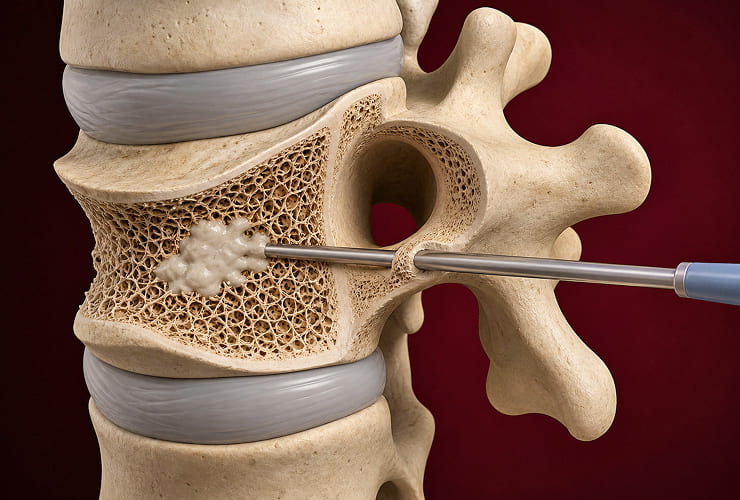
Vertebroplasty and kyphoplasty are minimally invasive, image-guided procedures used in selected cases of painful vertebral compression fracture. Both place medical-grade bone cement within the affected vertebral body to stabilize the fractured bone.
In vertebroplasty, cement is delivered through a hollow needle positioned in the fractured vertebra. In kyphoplasty, a balloon or another cavity-creating device is used before the cement is placed. The appropriate option depends on the fracture, anatomy, timing, and treatment goals.
The potential benefits and limitations are weighed against nonsurgical care and the procedure’s risks. Planning includes medication management, anesthesia or sedation, image guidance, activity after treatment, and follow-up for bone health.
Confirm That the Fracture Matches the Pain
Examination and imaging help confirm that an active compression fracture is the likely pain source before treatment is considered.
Why It May Be Considered
A painful vertebral compression fracture supported by imaging
Symptoms that correspond with the level and timing of the fracture
Pain or limited mobility despite appropriate initial care
Health, bone, and medication factors suitable for the procedure
What to Discuss With Your Specialist
Whether the compression fracture is the likely pain source
The difference between vertebroplasty and kyphoplasty in your case
Osteoporosis, cancer, medication, and bleeding considerations
Procedure risks, recovery, and longer-term bone care
Conditions We Treat
Pain can have many different causes. Our specialists take time to evaluate each patient, identify the possible source of pain, and recommend care based on their individual needs.
Take the First Step Toward Better Pain Management
Our specialists are here to understand your pain, identify its possible source, and develop a personalized treatment plan focused on improving your function and quality of life.